From
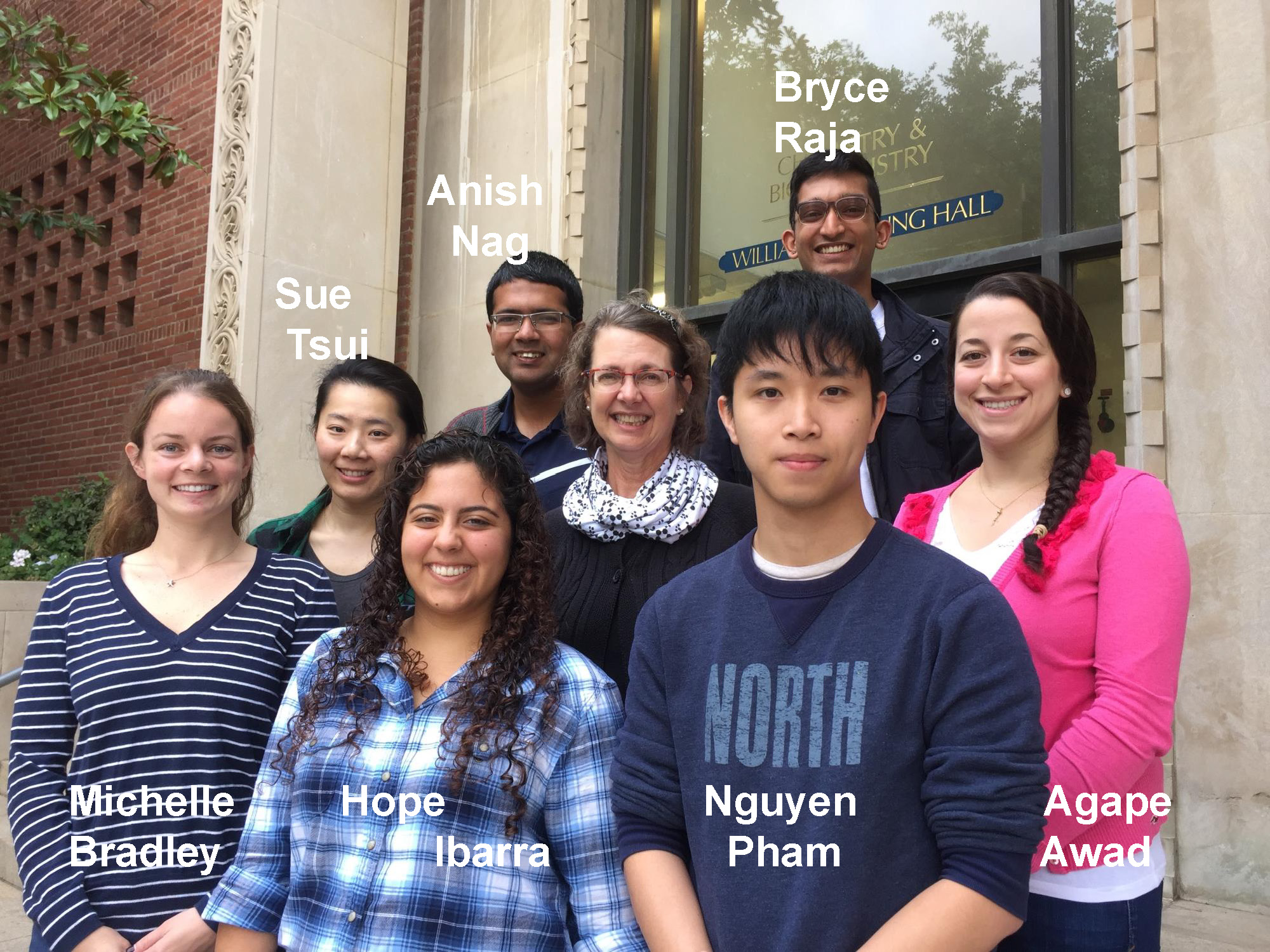
my Group 1996-2000
From my Group 2001-2005
From my Group 2006-2010
From
my Group 2011-Present
125. Guile, M. D., Jain, A., Anderson, K. A., Clarke, C. F. (2023) “New Insights on the Uptake and Trafficking of Coenzyme Q.” Antioxidants 12, 1391.
124. Wang, S., Jain, A., Novales, N. A., Nashner, A. N., Tran, F., Clarke, C. F. (2022) “Predicting and Understanding the Pathology of Single Nucleotide Variants in Human COQ Genes.” Antioxidants 11, 2308.
123. Yang, M. L., Connolly, S. E., Gee, R. J., Lam, T. T., Kanyo, J., Peng, J., Guyer, P., Syed, F., Tse, J. M., CLarke, S. G., Clarke, C. F., James, E. A., Speake, C., Evans-Molina, C., Arvan, P., Herold, K. C., Wen, L., Mamula, M. J. (2022) “Carbonyl Posttranslational Modification Associated with Early-Onset Type 1 Diabetes Autoimmunity” Diabetes 71, 1979-1993.
122. Latimer, S., Keene, S. A>, Stutts, L. R., Berger, A., Bernert, A. C., Soubeyrand, E., Wright, J., Clarke, C. F., Block, A. K., Colquhoun, T. A., Elowsky, C., Christensen, A., Wilson, M. A., Basset, G. J. (2021) “A dedicated flavin-dependent monooxygenase catalyzes the hydroxylation of demethoxyubiquinone into ubiquinone (coenzyme Q) in Arabidopsis” J Biol Chem 297, 101283.
121. Ayer, A., Fazakerley, D. J., Suarna, C., Maghzal, G. J., Sheipouri, D., Lee, K. J., Bradley, M. C., Fernández-del-Río, L., Tumanov, S., Kong, S. M., van der Veen, J. N., Yang, A., Ho, J. W. K., Clarke, S. G., James, D. E., Dawes, I. W., Vance, D. E., Clarke, C. F., Jacobs, R. L., Stocker, R. (2021) “Genetic screening reveals phospholipid metabolism as a key regulator of the biosynthesis of the redox-active lipid coenzyme Q.” Redox Biol 46, 102127.
120. Fernández-del-Río, L., Rodriguez-Lopez, S., Gutierrez-Casado, E., Gonzalez-Reyes, J. A., Clarke, C. F., Buron, M. I., and Villalba, J. M. (2021) “Regulation of hepatic coenzyme Q biosynthesis by dietary omega-3 polyunsaturated fatty acids.” Redox Biol 46, 102061.
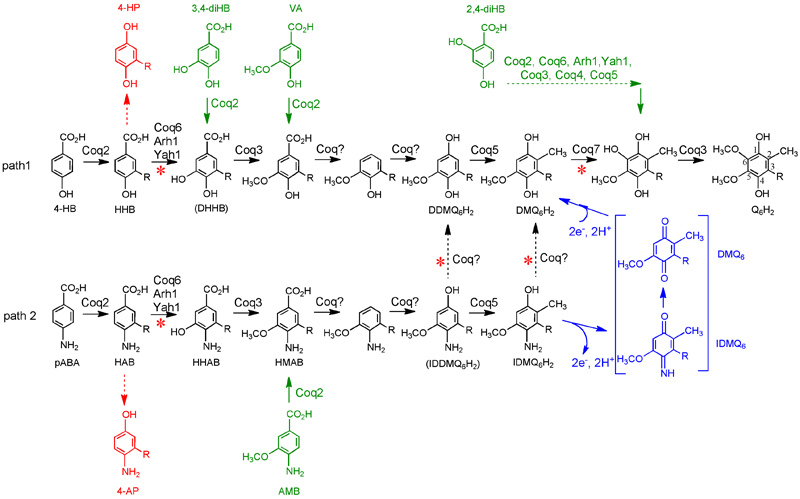
119. Fernández-del-Río, L., and Clarke, C. F. (2021) “Coenzyme Q Biosynthesis: An Update on the Origins of the Benzenoid Ring and Discovery of New Ring Precursors.” Metabolites 11, 385-401.
118. Acoba, M. G., Alpergin, E. S. S., Renuse, S., Fernández-del-Río, L., Lu, Y. W., Khalimonchuk, O., Clarke, C. F., Pandey, A., Wolfgang, M. J., and Claypool, S. M. (2021) “The mitochondrial carrier SFXN1 is critical for complex III integrity and cellular metabolism.” Cell Rep 34, 108869.
117. Fernández-del-Río, L., Soubeyrand, E., Basset, G. J., and Clarke, C. F. (2020) “Metabolism of the Flavonol Kaempferol in Kidney Cells Liberates the B-ring to Enter Coenzyme Q Biosynthesis.” Molecules 25, 2955-2962.
116. Awad, A. M., Nag, A., Pham, N. V. B., Bradley, M. C., Jabassini, N., Nathaniel, J., and Clarke, C. F. (2020) “Intragenic suppressor mutations of the COQ8 protein kinase homolog restore coenzyme Q biosynthesis and function in Saccharomyces cerevisiae.” PLoS One 15, e0234192.
115. Fernández-del-Río, L., Kelly, M. E., Contreras, J., Bradley, M. C., James, A. M., Murphy, M. P., Payne, G. S., and Clarke, C. F. (2020) “Genes and lipids that impact uptake and assimilation of exogenous coenzyme Q in Saccharomyces cerevisiae.” Free Radic Biol Med 154, 105-118.
114. Widmeier, E., Yu, S., Nag, A., Chung, Y. W., Nakayama, M., Fernández-Del-Río, L., Hugo, H., Schapiro, D., Buerger, F., Choi, W. I., Helmstadter, M., Kim, J. W., Ryu, J. H., Lee, M. G., Clarke, C. F., Hildebrandt, F., and Gee, H. Y. (2020) “ADCK4 Deficiency Destabilizes the Coenzyme Q Complex, Which Is Rescued by 2,4-Dihydroxybenzoic Acid Treatment.” J Am Soc Nephrol 31, 1191-1211.
113. Bradley, M. C., Yang, K., Fernández-Del-Río, L., Ngo, J., Ayer, A., Tsui, H. S., Novales, N. A., Stocker, R., Shirihai, O. S., Barros, M. H., and Clarke, C. F. (2020) “COQ11 deletion mitigates respiratory deficiency caused by mutations in the gene encoding the coenzyme Q chaperone protein Coq10.” J Biol Chem 295, 6023-6042.
112. Bernert, A. C., Jacobs, E. J., Reinl, S. R., Choi, C. C. Y., Roberts Buceta, P. M., Culver, J. C., Goodspeed, C. R., Bradley, M. C., Clarke, C. F., Basset, G. J., and Shepherd, J. N. (2019) “Recombinant RquA catalyzes the in vivo conversion of ubiquinone to rhodoquinone in Escherichia coli and Saccharomyces cerevisiae.” Biochim Biophys Acta Mol Cell Biol Lipids 1864, 1226-1234.
111. Tsui, H. S., Pham, N. V. B., Amer, B. R., Bradley, M. C., Gosschalk, J. E., Gallagher-Jones, M., Ibarra, H., Clubb, R. T., Blaby-Haas, C. E., and Clarke, C. F. (2019) “Human COQ10A and COQ10B are distinct lipid-binding START domain proteins required for coenzyme Q function.” Journal of lipid research 60, 1293-1310.
110. Eisenberg-Bord, M., Tsui, H. S., Antunes, D., Fernández-Del-Río, L., Bradley, M. C., Dunn, C. D., Nguyen, T. P. T., Rapaport, D., Clarke, C. F., and Schuldiner, M. (2019) “The Endoplasmic Reticulum-Mitochondria Encounter Structure Complex Coordinates Coenzyme Q Biosynthesis.” Contact (Thousand Oaks) 2, 1-14.
109. Widmeier, E., Airik, M., Hugo, H., Schapiro, D., Wedel, J., Ghosh, C. C., Nakayama, M., Schneider, R., Awad, A. M., Nag, A., Cho, J., Schueler, M., Clarke, C. F., Airik, R., and Hildebrandt, F. (2019) “Treatment with 2,4-Dihydroxybenzoic Acid Prevents FSGS Progression and Renal Fibrosis in Podocyte-Specific Coq6 Knockout Mice.” J Am Soc Nephrol 30, 393-405.
108. Awad, A. M., Bradley, M. C., Fernández-Del-Río, L., Nag, A., Tsui, H. S., and Clarke, C. F. (2018) “Coenzyme Q10 deficiencies: pathways in yeast and humans.“ Essays Biochem 62, 361-376.
107. Awad, A. M., Venkataramanan, S., Nag, A., Galivanche, A. R., Bradley, M. C., Neves, L., Douglass, S., Clarke, C. F., Johnson T. L. (2017) “Chromatin-remodeling SWI/SNF complex regulates coenzyme Q6 synthesis and a metabolic shift to respiration in yeast.” J Biol Chem 292, 14851-14866.
106. He, C. H., Black, D. S., Allan, C. M., Meunier, B., Rahman, S., Clarke, C. F. (2017) “Human COQ9 rescues a coq9 yeast mutant by enhancing coenzyme Q biosynthesis from 4-hydroxybenzoic acid and stabilizing the CoQ synthome.” Frontiers in Physiology 8, 463.
105. Fernández-del-Río, L., Nag, A., Gutiérrez Casado, E., Ariza, J., Awad, A. M., Joseph, A. I., Kwon, O., Verdin, E., de Cabo, R., Schneider, C., Torres, J. Z., Burón, M. I., Clarke, C. F., Villalba, J. M. (2017) “Kaempferol increases levels of coenzyme Q in kidney cells and serves as a biosynthetic ring precursor.” Free Rad Biol Med 110, 176-187.
104. Clarke CF, Allan CM. (2015)
"Biochemistry: Unexpected role for vitamin B2." Nature. 2015 Jun 25;522(7557):427-8. doi: 10.1038/nature14536. Epub 2015 Jun 17. No abstract available. PMID: 26083748
103. He CH, Black DS, Nguyen TP, Wang C, Srinivasan C, Clarke CF. (2015)
"Yeast Coq9 controls deamination of coenzyme Q intermediates that derive from para-aminobenzoic acid." Biochim Biophys Acta. 2015 Sep;1851(9):1227-39. doi: 10.1016/j.bbalip.2015.05.003. Epub 2015 May 23. PMID: 26008578
102. Xie LX, Williams KJ, He CH, Weng E, Khong S, Rose TE, Kwon O, Bensinger SJ, Marbois BN, Clarke CF. (2015)
"Resveratrol and para-coumarate serve as ring precursors for coenzyme Q biosynthesis." J Lipid Res. 2015 Apr;56(4):909-19. doi: 10.1194/jlr.M057919. Epub 2015 Feb 14. PMID: 25681964
101. Allan CM, Awad AM, Johnson JS, Shirasaki DI, Wang C, Blaby-Haas CE, Merchant SS, Loo JA, Clarke CF. (2015)
"Identification of Coq11, a new coenzyme Q biosynthetic protein in the CoQ-synthome in Saccharomyces cerevisiae." J Biol Chem. 2015 Mar 20;290(12):7517-34. doi: 10.1074/jbc.M114.633131. Epub 2015 Jan 28. PMID: 25631044
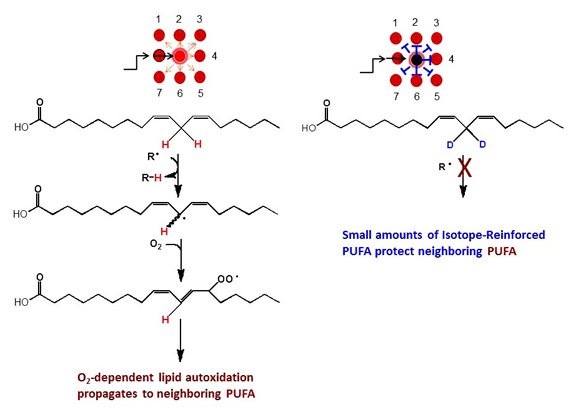
100. Andreyev AY, Tsui HS, Milne GL, Shmanai VV, Bekish AV, Fomich MA, Pham MN, Nong Y, Murphy AN, Clarke CF, Shchepinov MS. (2015)
"Isotope-reinforced polyunsaturated fatty acids protect mitochondria from oxidative stress."
Free Radic Biol Med. 2015 May;82:63-72. doi: 10.1016/j.freeradbiomed.2014.12.023. Epub 2015 Jan 8. PMID: 25578654
99. Nguyen, T. P. T., Casarin, A., Desbats, M. A., Doimo, M., Trevisson, E., Santos-Ocana, C., Navas, P., Clarke, C. F., and Salviati, L. (2014)
"Molecular characterization of the human COQ5 C-methyltransferase in Coenzyme Q10 biosynthesis.
"Biochim Biophys Acta. 2014 Nov;1841(11):1628-38. doi: 10.1016/j.bbalip.2014.08.007. Epub 2014 Aug 23. PMID: 25152161
98. Shchepinov, M. S., Roginsky, V. A., Brenna, J. T., Molinari, R. J., To, R., Tsui, H., Clarke, C. F., and Manning-Bog, A. B. (2014) "Chapter 31 - Deuterium protection of polyunsaturated fatty acids against lipid peroxidation: A novel approach to mitigating mitochondrial neurological diseases". In Omega-3 Fatty Acids in Brain and Neurological Health (Watson, ed.) pp. 373-383.
97. Chin, R.M., Fu, X., Pai, M.Y., Vergnes, L., Hwang, H., Deng, G., Diep, S., Lomenick, B., Meli, V.S., Monsalve, G.C., Hu, E., Whelan, S.A., Wang, J.X., Jung, G., Solis, G.M., Fazlollahi, F., Kaweeteerawat, C., Quach, A., Nili, M., Krall, A.S., Godwin, H.A., Chang, H.R., Faull, K.F., Guo, F., Jiang, M., Trauger, S.A., Saghatelian, A., Braas, D., Christofk, H.R, Clarke, C.F., Teitell, M.A., Petrascheck, M., Reue, K., Jung, M.E., Frand, A.R., Huang, J. "The metabolite α-ketoglutarate extends lifespan by inhibiting ATP synthase and TOR." Nature. 2014 Jun 19;510(7505):397-401. PMCID: In Process.
96. Clarke CF, Rowat AC, Gober JW. "Osmotic stress: Is CoQ a membrane stabilizer?". Nat Chem Biol. 2014 Apr;10(4):242-3. PMCID: In Process
95. He, C.H., Xie, L. X., Allan, C. M., Tran, U. C., and Clarke, C. F. (2014) "Coenzyme Q supplementation or over-expression of the yeast Coq8 kinase stabilizes multi-subunit Coq polypeptides complexes in yeast coq null mutants." Biochim Biophys Acta 1841, 630-644. PMCID: PMC3959571.
94. Lamberson, C. R., Xu, L., Muchalski, H., Montenegro-Burke, J. R., Shmanai, V. V., Bekish, A. V., McLean, J. A., Clarke, C. F., Shchepinov, M. S., and Porter, N. A. (2014) "Unusual kinetic isotope effects of deuterium reinforced polyunsaturated fatty acids in tocopherol mediated free radical chain oxidations." J. Amer. Chem. Soc. 136, 838-841. PMCID: In Process.
93. Ashraf, S., Gee, H. Y., Woerner, S., Xie, L. X., Vega-Warner, V., Svjetlana, L., Fang, H., Song, X., Cattran, D. C., Avila-Casado, C., Paterson, A. D., Nitschke, P., Bole-Feysot, C., Cochat, P., Esteve-Rudd, J., Haberberger, B., Allen, S. J., Zhou, W., Airik, R., Otto, E. A., Barua, M., Al-Hamed, M. H., Kari, J. A., Bockenhauer, D., Kleta, R., El Desoky, S., Hacihamdioglu, D. O., Gok, F., Washburn, J., Wiggins, R. C., Choi, M., Lifton, R. P., Levy, S., Han, Z., Salviati, L., Prokisch, H., Williams, D. S., Pollak, M., Clarke, C. F., Pei, Y., Antignac, C., and Hildebrandt, F. (2013) "ADCK4 mutations promote steroid-resistant nephrotic syndrome through CoQ10 biosynthesis disruption." J. Clin. Invest. 123, 5179-5189. PMCID: PMC3859425.
92. Gasser, D. L., Winkler, C. A., Peng M., Ping, A., McKenzie, L. M., Kirk, G. D., Shi, Y., Xie, L. X., Marbois, B. N., Clarke, C. F., and Kopp, J. B. (2013) "Focal Segmental Glomerulosclerosis is associated with a PDSS2 haplotype and independently, with a decreased content of coenzyme Q10." Amer. J. Physiol. Renal Physiol. Am J Physiol Renal Physiol. Oct; 305(8):F1228-38. PMCID: PMC3798722.
91. Allan, C. M., Hill, S., Morvaridi, S., Saiki, R., Johnson, J. S., Liau, W-S., Hirano, K., Kawashima, T., Ziming, J., Loo, J. A., Shepherd, J. N., and Clarke, C. F. (2013) "A conserved START domain coenzyme Q-binding polypeptide is required for efficient Q biosynthesis, respiratory electron transport, and antioxidant function in Saccharomyces cerevisiae". Biochim. Biophys. Acta 1831, 776-791. PMCID: PMC3909687.
90. Gomez, F., Monsalve, G. C., Tse, V., Saiki, R., Weng, E., Lee, L., Srinivasan, C., Frand, A. R., and Clarke, C. F. (2012) "Delayed accumulation of intestinal coliform bacteria enhance life span and stress resistance in Caenorhabditis elegans fed respiratory deficient E. coli." BMC Microbiol. 12, 300. PMCID: PMC3548685.
89. Nguyen, T. P. T., Clarke, C. F. (2012) "Folate status of gut microbiome affects Caenorhabditis elegans lifespan". BMC Biology 10, 66 PMCID: PMC3409036.
88. Gomez, F., Saiki, R., Chin, R., Srinivasan, C., and Clarke, C. F. (2012) "Restoring de novo coenzyme Q biosynthesis in Caenorhabditis elegans coq-3 mutants yields profound rescue compared to exogenous coenzyme Q supplementation". Gene 506, 106-116. PMCID: PMC3437764.
87. Hill, S., Lamberson, C. R., Libin X., To, R., Tsui, H. S., Shmanai, V. V., Bekish, A. V., Awad, A. M., Marbois, B. N., Cantor, C. R., Porter, N. A., Clarke, C. F., and Shchepinov, M. S. (2012) "Small amounts of isotope-reinforced polyunsaturated fatty acids suppress lipid autoxidation." Free Rad. Biol. Med. 53, 893-906. PMCID: PMC3437768.
86. Xie, L. X., Ozeir, M., Tang, J. Y., Chen, J. Y., Jaquinod, S-K., Fontecave, M, Clarke, C. F., and Pierrel, F. (2012) "Over-expression of the Coq8 kinase in Saccharomyces cerevisiae coq null mutants allows for accumulation of diagnostic intermediates of the coenzyme Q6 biosynthetic pathway." J. Biol. Chem. 287, 23571-23581. PMCID: PMC3390632.
85. Rahman, S., Clarke, C. F., and Hirano, M. (2011) “176th ENMC International Workshop: Diagnosis and treatment of coenzyme Q10 deficiency”. Neuromuscular Disorders. 22, 76-86. PMCID: PMC3222743. REVIEW ARTICLE
84. Clarke, C. F. (2011) “Coq6 hydroxylase: Unmasked and bypassed.” Chem. Biol. 18, 1069-1070. PMCID:PMC3245979. INVITED COMMENTARY
83. Pfeiffer, M., Kayser, E.B., Yang, X., Abramson, E., Kenaston, M. A., Lago, C. U., Lo, H.H., Sedensky, M. M., Lunceford, A., Clarke, C. F., Wu, S. J., McLeod, C., Finkel, T., Morgan, P., Mills, E. M. (2011) “Caenorhabditis elegans UCP4 controls complex II-mediated oxidative phosphorylation through succinate transport.” J. Biol. Chem. 286, 37712-37720. PMCID:PMC3199514.
82. Falk, M. J., Polyak, E., Zhang, Z., Peng, M., King, R., Maltzman, J. S., Okwuego, E., Horyn, O., Nakamaru-Ogiso, E., Ostrovsky, J., Xie, L. X., Chen, J. Y., Marbois, B., Nissim, I., Clarke, C. F., Gasser, D. L. (2011) “Probucol ameliorates renal and metabolic sequelae of primary CoQ deficiency in Pdss2 mutant mice.” EMBO Mol. Med. 7, 410-427. PMCID: PMC3394513.
81. Heeringa, S. F., Chernin, G., Chaki, M., Zhou, W., Sloan, A. J., Ji, Z., Xie, L. X., Salviati, L., Hurd, T. W., Vega-Warner, V., Killen, P. D., Raphael Y., Ashraf, S., Ovunc, B., Schoeb, D. S., McLaughlin, H. M., Airik, R., Vlangos, C. N., Gbadegesin, R., Hinkes, B., Saisawat, P., Trevisson, E., Doimo, M., Casarin, A., Pertegato, V., Giorgi, G., Prokisch, H., Rötig, A., Antignac, C., Nurnberg, G., Becker, C., Wang, S., Ozaltin, F., Topaloglu, R., Bakkaloglu, A., Bakkaloglu, S. A., Müller, D., Beissert, A., Mir, S., Berdeli, A., Özen, S., Zenker, M., Verena Matejas, V., Ocana, C. S., Navas, P., Kusakabe, T., Kispert, A., Akman, S., Soliman, N. A., Krick, S., Mundel, P., Reiser J., Peter Nurnberg, P., Clarke, C. F., Wiggins, R. C., Faul, C., and Hildebrandt, F. (2011) “COQ6 mutations in human patients produce nephrotic syndrome with sensorineural deafness.” J. Clin. Invest. (2011) 121, 2013-2024. PMCID: PMC3083770.
80. Xie, L. X., Hsieh, E. J., Watanabe, S., Allan, C. M., Chen, J. Y., Tran, U. C., and Clarke, C. F. (2011) “Expression of the human atypical kinase ADCK3 rescues coenzyme Q biosynthesis and phosphorylation of Coq polypeptides in yeast coq8 mutants.” Biochim. Biophys. Acta (2011) 1811, 348-360. PMCID: PMC3075350.
79. Hill, S., Hirano, K., Shmanai, V. V., Marbois, B. N., Vidovic, D., Bekish, A. V., Kay, B., Tse, V., Fine, J., Clarke, C. F., and Shchepinov, M. S., (2011) “Isotope-reinforced polyunsaturated fatty acids strongly protect yeast cells from oxidative stress.” Free Radical Biol. Med. 50, 130-138. PMCID: PMC3014413.
|