Robert T. Clubb

Professor of Biochemistry

B.S., University of Wisconsin; Ph.D., University of Michigan; Leukemia Society of America Postdoctoral Fellow; Intramural National Institutes of Health Postdoctoral Fellow; Member of the UCLA-DOE Laboratory of Structural Biology and Molecular Medicine; Member of the Molecular Biology Institute

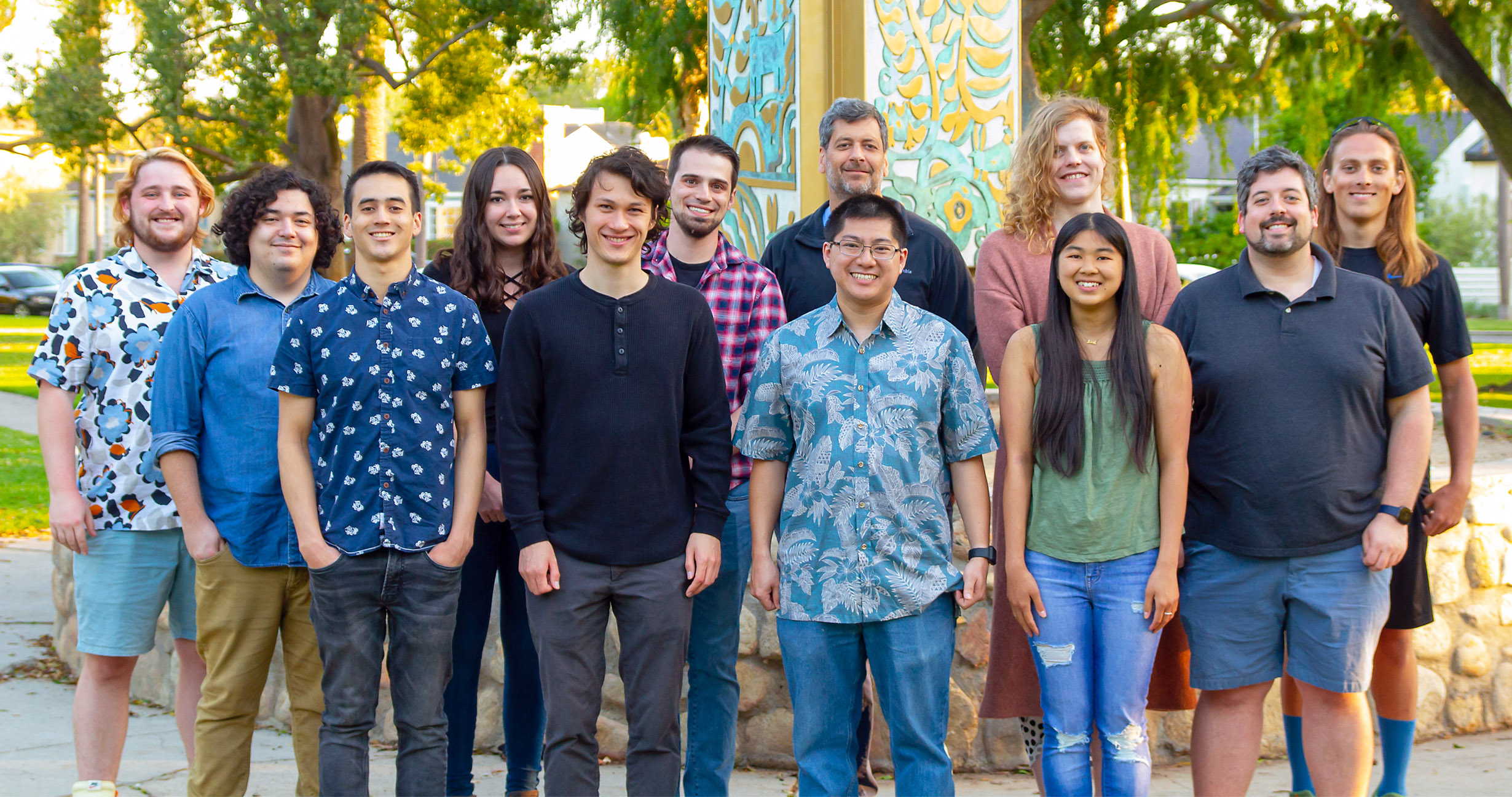
Left to Right: Robert Peterson, Robert Clubb, Scott Robson, Kurt Januszyk, Valerie Villareal, Ethan Weiner, Tom Suree, Evgeny Fadeev, Rose Pilpa, William Thieu, Melissa Wong, Mohamad Abanni

Phone: (310) 206-2334
Lab: (310) 206-3044
Fax: (310) 206-4779

E-mail: rclubb@mbi.ucla.edu

UCLA Department of Chemistry & Biochemistry
602 Boyer Hall
Box 157005 (post)
611 Charles E. Young Drive East (courier)
Los Angeles, CA 90095-1570

Map of UCLA


  Prospective Graduate Students    |   Biochemistry Home   |   Department of Chemistry & Biochemistry Home   |   MBI Home   |   UCLA Home
 
  Clubb Research Overview

Understanding the underlying basis of biomolecular recognition is a central and unifying theme of my laboratory’s research. We investigate the origins of binding specificity in protein complexes by determining their atomic level structures and dynamics using NMR spectroscopy and X-ray crystallography, and we probe the determinants of complex formation using biochemical assays (1-19). Our work is concentrated on two main areas of biology, reactions that rearrange DNA and reactions that covalently anchor proteins to the cell wall in Gram-positive bacteria.

Macromolecular recognition: DNA recombination. Reactions that rearrange DNA play a central role in biology, promoting among other things, the transposition, site-specific recombination, and repair of DNA. My group is studying the atomic structures and assembly determinants of protein-nucleic acid complexes involved in two distinct DNA rearrangements, site-specific recombination mediated by tyrosine recombinases, and the retrotranposition of the human L1 element.

Tyrosine Recombinases: Tyrosine recombinases are present in all kingdoms of life, and they play a central role in such diverse processes as viral integration, chromosome partitioning, and selective gene activation. Moreover, these enzymes are directly involved in the dissemination of antibiotic resistance because they are used to mobilize conjugative transposons, extremely promiscuous genetic elements that are prevalent in drug-resistant pathogens that cause human disease (for example, cholera, pneumonia, endocarditis, nosocomial and suppurative infections). Our work seeks to understand how bivalent DNA-binding tyrosine recombinases, which are called integrases (Int), assemble into higher-order recombinogenic nucleoprotein structures and how their enzymatic activity is regulated by excisionase (Xis) accessory factors (1,3,11,14,15,19). We are studying two distantly related Int-Xis systems to reveal unifying features of this ubiquitous reaction. The recombinases and accessory factors of the l phage are being studied because its recombination mechanism is paradigmatic for these rearrangements, and the functionally equivalent proteins that mobilize the Tn916 conjugative transposon are being studied to learn how the Int-Xis system has been harnessed to spread antibiotic resistance.

Our most recent research has focused on the regulatory switch that controls the directionality of phage l recombination. Phage l inserts and excises its genome using distinct higher-order nucleoprotein complexes, whose assembly is controlled by cooperative and competitive DNA binding by four proteins: the phage encoded Int and Xis proteins, and the host encoded factors IHF and FIS. Xis is the prime regulator of recombination, triggering prophage excision by cooperatively assembling with Int and Fis onto a 40 base-pair regulatory element on the right arm of the phage. Our work has concentrated on understanding how this regulatory complex is assembled and how it dramatically alters the trajectory of DNA within the higher-order nucleoprotein complex that recombines DNA. In collaboration with Drs. Art Landy (Brown University) and Reid Johnson (UCLA), we have mapped the interactions between these proteins(11), used NMR spectroscopy to solve the structures of the Int and Xis components of this complex (14,15) and X-ray crystallography to solve the structure of the Xis-DNA binary complex (19). This work is very exciting because we are now poised to visualize the atomic structure of the entire regulatory complex.

L1 retrotransposition: L1s are endogenous mobile genetic elements that have dispersed and accumulated in the genomes of higher eukaryotes via germline retrotransposition. The retrotransposition of the L1 element (Long Interspersed Nuclear Element) in the human germ-line or very early in development has been shown to cause a variety of genetic disorders, including: hemophilia, muscular dystrophy, b-thalessemia and X-linked retinitis pigmentosa. Moreover, somatic insertions of truncated L1s in the APC tumor suppressor gene and the c-myc proto-oncogene are implicated in colon and breast cancers(20). About 100,000 of these genetic elements are found in humans (~17% of genomic DNA), of which 80–100 appear to be retrotransposition competent (21). They are also capable of mobilizing Alu-type elements, which comprise another 10% of the genome. L1s are mobilized using an unusual target-primed reverse transcriptase mechanism that requires two L1 encoded proteins, ORF2, an endonuclease and reverse transcriptase, and ORF1, a multimeric RNA-binding protein that exhibits nucleic acid chaperone activity(22).

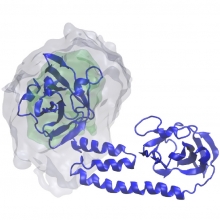
As part of an effort to reveal the structural basis of retrotransposition, my laboratory is studying the ORF1-encoded protein. This essential protein forms a cytoplasmic ribonucleoprotein complex with L1 RNA, and its binding may facilitate the loading of ORF2, the transfer of L1 RNA into the nucleus, or potentially the strand transfer reactions of reverse transcription. We are working to solve the atomic structure of the ORF1 RNA-binding domain, and to characterize how it recognizes RNA and other nucleic acid polymers. This work is important because it will reveal why amino acid mutations that localize to this domain disrupt L1 retrotransposition and it is a first step towards characterizing other proteins and protein-nucleic acid complexes involved in this important recombination reaction.

New NMR methods: Solving the structures of protein-nucleic acid complexes by NMR spectroscopy remains a challenging problem, and worldwide, only ~4-5 of these structures are determined each year. As much of our work involves NMR studies of protein-nucleic complexes (1,2,5,7,10,12,13) we have developed new methods to study these systems (8,9). In particular, we have developed new NMR pulse programs and sample-engineering techniques to facilitate their study and to improve the resultant structural models obtained using this technique (8,9). Recently, these methods and access to an 800 MHz NMR spectrometer at the DOE Pacific Northwest Environmental Laboratory enabled us to determine the structure of one of the largest protein-DNA complexes ever solved by NMR spectroscopy, the ARID-DNA complex (10). ARIDs (AT-rich interaction domains) are novel eukaryotic DNA-binding domains (23), and our work has revealed how they function in a large number of transcription factors that regulate cell proliferation, differentiation and development.

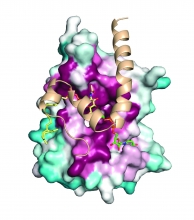
Macromolecular recognition: Sortase-substrate binding. The emergence of multi-drug resistance bacteria has highlighted the growing need for new antimicrobial compounds that target novel aspects of microbial physiology. Surface proteins in Gram-positive pathogens are frequently required for virulence, and research in the past decade has revealed that a large fraction of these proteins are covalently anchored to the cell wall by sortase enzymes(24,25). Sortases recognize a C-terminal cell wall sorting signal (CWS) in their protein substrates that consists of an LPXTG motif, followed by a hydrophobic domain and a tail of mostly positively-charged residues. After secretion of the precursor surface protein, sortase recognizes the LPXTG motif, and catalyzes a transpeptidation reaction that links the carboxyl-group of the threonine residue to the cell wall precursor lipid II, which is subsequently incorporated into the peptidoglycan. An understanding of how sortases recognize and process the LPXTG motif may lead to the development of a new broad-spectrum anti-infective agent, since sortase (-) strains of Staphyloccocus aureus, Listeria monocytogenes, Streptococcus pneumonia, Actinomyces ssp., S. gordonii and S. mutans display defects in bacterial adherence and/or virulence, and sortase-like enzymes and the LPXTG signal are universally conserved in Gram-positive bacteria (26).

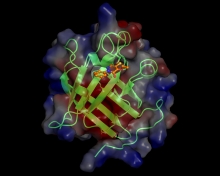
Ultimately we would like to use structure based approaches to rationally design a therapeutically useful inhibitor of cell wall protein anchoring. Our current efforts are directed at understanding how sortases recognize their substrates and their mechanism of catalysis. Previously, my group was the first to determine the three-dimensional structure of a sortase enzyme, enabling us to propose a plausible mechanism for how it anchors surface proteins (6). In collaboration with Dr. Mike Jung’s group at UCLA, we are now testing this mechanism by characterizing how peptide based compounds irreversibly inhibit the enzyme. Using this approach, we recently characterized the ionization state of the active site catalytic dyad, and are now working to visualize how these inhibitors bind the enzyme (4). Interestingly, most bacteria encode more than a single sortase related protein and a large number of CWS-containing proteins that are their potential substrates. However, it is not known whether proteins are selectively sorted to the cell surface by a specific sortase or whether the sortases in these organisms have degenerate functions. We are very much interested in this issue, since if the enzymes have redundant functions, antimicrobial compounds targeted towards a particular sortase could prove ineffective and drug resistance strains could readily evolve by horizontal gene transfer. To begin to address this issue, we have recently performed a comparative genome analysis of completely sequenced microbial genomes, and were able to predict at least six distinct families of sortases (18). Our current research uses biochemical methods to determine the substrate specificities of representative members of each of these families, to ascertain whether they act to specifically process distinct sorting signals within the cell.

1. Connolly, K. M., Wojciak, J. M., and Clubb, R. T. (1998) Nature Structural Biology 5(7), 546-550


2. Connolly, K. M., Ilangovan, U., Wojciak, J. M., Iwahara, M., and Clubb, R. T. (2000) Journal of Molecular Biology 300(4), 841-856

3. Connolly, K. M., Iwahara, M., and Clubb, R. T. (2002) Journal of Bacteriology 184(8), 2088-2099

4. Connolly, K. M., Smith, B. T., Pilpa, R., Ilangovan, U., Jung, M. E., and Clubb, R. T. (2003) J Biol Chem 278(36), 34061-5.

5. Ilangovan, U., Wojciak, J. M., Connolly, K. M., and Clubb, R. T. (1999) Biochemistry 38(26), 8367-76

6. Ilangovan, U., Ton-That, H., Iwahara, J., Schneewind, O., and Clubb, R. T. (2001) Proc Natl Acad Sci U S A 98(11), 6056-6061

7. Iwahara, J., and Clubb, R. T. (1999) The Embo Journal 18(21), 6084-6094

8. Iwahara, J., Wojciak, J. M., and Clubb, R. T. (2001) Journal of Biomolecular Nmr 19(3), 231-241

9. Iwahara, J., Wojciak, J. M., and Clubb, R. T. (2001) Journal of Magnetic Resonance 153, 262-266

10. Iwahara, J., Iwahara, M., Daughdrill, G. W., Ford, J., and Clubb, R. T. (2002) Embo Journal 21(5), 1197-1209

11. Warren, D., Sam, M. D., Manley, K., Sarkar, D., Lee, S. Y., Abbani, M., Wojciak, J. M., Clubb, R. T., and Landy, A. (2003) Proc Natl Acad Sci U S A 100(14), 8176-81

12. Wojciak, J. M., Connolly, K. M., and Clubb, R. T. (1999) Nature Structural Biology 6(4), 366-37

13. Wojciak, J. M., Iwahara, J., and Clubb, R. T. (2001) Nature Structural Biology 8(1), 84-90

14. Wojciak, J. M., Sarkar, S., Landy, A., and Clubb, R. T. (2002) Proc Natl Acad Sci U S A 99(6), 3434-3439

 15. Sam, M. D., Papagiannis, C. V., Connolly, K. M., Corselli, L., Iwahara, J., Lee, J., Phillips, M., Wojciak, J. M., Johnson, R. C., and Clubb, R. T. (2002) J Mol Biol 324(4), 791-805

16. Milev, S., Gorfe, A. A., Karshikoff, A., Clubb, R. T., Bosshard, H. R., and Jelesarov, I. (2003) Biochemistry 42(12), 3492-502

17. Milev, S., Gorfe, A. A., Karshikoff, A., Clubb, R. T., Bosshard, H. R., and Jelesarov, I. (2003) Biochemistry 42(12), 3481-91

18. Comfort, D., and Clubb, R. T. (submitted)

19. Sam, M., Cascio, D., Johnson, R. C., and Clubb, R. T. (submitted)

20. Moran, J. V. (1999) Genetica 107(1-3), 39-51

21. Brouha, B., Schustak, J., Badge, R. M., Lutz-Prigge, S., Farley, A. H., Moran, J. V., and Kazazian, H. H., Jr. (2003) Proc Natl Acad Sci U S A 100(9), 5280-5

22. Martin, S. L., Li, J., and Weisz, J. A. (2000) J Mol Biol 304(1), 11-20

23. Kortschak, R. D., Tucker, P. W., and Saint, R. (2000) Trends in Biochemical Sciences 25(6), 294-299

24. Cossart, P., and Jonquieres, R. (2000) Proc Natl Acad Sci U S A 97(10), 5013-5015

25. Mazmanian, S. K., Ton-That, H., and Schneewind, O. (2001) Molecular Microbiology 40, 1049-1057

26. Pallen, M. J., Lam, A. C., Antonio, M., and Dunbar, K. (2001) Trends in Microbiology 9, 97-10


  Current Members of Clubb Lab

Professor Robert Clubb

B.S., University of Wisconsin; Ph.D., University of Michigan

Gets the big pay check, sits around waiting for results, drinks coffee, helps write papers and tells people to work harder.

Dr. Scott Robson

Ph.D., Biochemistry, University of Connecticut

Is investigating how virulence factors are anchored to the cell wall of Bacillus anthracis

Robson is coauthor on ref 56.

Dr. Thomas Spirig

Ph.D., Swiss Federal Institute of Technology (ETH), Zurich, Switzerland

Is studying how the SrtA sortase attaches proteins to the cell wall of S. aureus

Tim Anderson

B.S., Biochemistry, Colorado State University

Is developing a new experimental system in which to study cellulosic biomass degradation by cellulosomes.
This work could lead to improved methods to convert lignocellulosic biomass into useful liquid biofuels

Albert Chan

B.A., Biochemistry, University of California, Berkeley

Is trying to develop an inhibitor of bacterial cell wall protein display that may be useful as an anti-infective agent

Reza Malmirchegini

B.A., Molecular and Cell Biology, University of California, Berkeley

Is studying how Staphylococcus aureus extracts heme from hemoglobin during infections

Valerie Villareal

B.S., Biochemistry, Cal State Los Angeles

Is studying how the pathogen Staphylococcus aureus transfers heme captured from hemoglobin across the cell wall

Villareal is coauthor on ref 49, 56, 59.

Ethan Weiner

B.A., Biochemistry, University of California, Berkeley

Is investigating how virulence factors are anchored to the cell wall of Bacillus anthracis
Is working with Scott Robson and Tim Anderson to develop a new experimental system in which to study cellulosic biomass degradation by cellulosomes

Former Undergraduate Students:
Lara Atchabahian (Lara received her B.S. in Biochemistry in 2009)

Melissa Wong (UCLA, B.S. 07, currently PhD student at UCSD)

Former Graduate Students:
Dr. Mohamad Abbani (Postdoctoral fellow at Cedars-Sinai Medical Center)

Dr. Kevin Connolly (Director of Scientific Affairs and Product Development at Jarrow Formulas)

Dr. Kurt Januszyk (Postdoctoral fellow at Sloan-Kettering)

Melanie Marohn (Received her Masters degree in 2009. Currently teaching high school chemistry)

Dr. Rosemarie Pilpa (Postdoctoral fellow at the Salk Institute)

Dr. My Sam (Postdoctoral fellow at the Harvard Medical School)

Dr. Tom Suree (Postdoctoral fellow, UCLA Department of Medicine)

William Thieu (Staff Scientist, Stanford University)

Dr. Jonathan Wojciak (Postdoctoral fellow at the Scripps Research Institute)

Former Postdoctoral Fellows:
Dr. David Comfort (Paracel, Inc)

Dr. Evgeny Fadeev (Research Scientist at University of California, at Irvine)

Dr. Udayar Ilangovan (Assistant Professor/Research, The University of Texas Health Science Center at San Antonio)

Dr. Junji Iwahara (Assistant Professor at the University of Texas Medical Branch at Galveston)

Dr. Chu Kong Liew (Postdoctoral Researcher, Victor Chang Cardiac Research Institute)

Dr. Mandar Naik (Research Scientist, Rutgers University)

Dr. Fa-Kuen Shieh (Assistant Professor of Biochemistry, Department of Chemistry, National Central University, Taiwan)


  Clubb Group Photosp
2001
2000
Top Row, Left to Right: My Sam, Kurt Januszyk, Rose Pilpa, Jon Wojciak, Rob Clubb, Kevin Connolly, Junji Iwahara, Mizuho Iwahara. Bottom Row, Left to Right: U. Ilangovan, Eugene Wong, Maureen Koo
Top Row, Left to Right: Robert Clubb, Alex Rainow, U. Ilangovan, Jon Wojciak. Bottom Row: Robert Peterson, Kevin Connolly, Mizuho Iwahara, Junji Iwahara. Not Pictured: James Lee, Won-Tok Choi
   Representative Publications

61. Suree N, Yi SW, Thieu W, Marohn M, Damoiseaux R, Jung ME and Clubb RT. Discovery and Structure Activity Relationship Analysis of Staphylococcus aureus Sortase A Inhibitors. Bioorganic & Medicinal Chemistry (submitted)

60. Fadeev EA, Sam MD, Clubb RT. NMR structure of the amino-terminal domain of the lambda integrase protein in complex with DNA: immobilization of a flexible tail facilitates beta-sheet recognition of the major groove. J Mol Biol. 2009 May 15;388(4):682-90. Epub 2009 Mar 24.

59. Suree N, Liew CK, Villareal VA, Thieu W, Fadeev EA, Clemens JJ, Jung ME, Clubb RT. The structure Of the staphylococcus aureus sortase-substrate complex reveals how the universally conserved Lpxtg sorting signal is recognized. J Biol Chem. 2009 Jul 10. [Epub ahead of print]. PMID: 19592495 [PubMed - as supplied by publisher]

58. Wilkinson TA, Januszyk K, Phillips ML, Tekeste SS, Zhang M, Miller JT, Le Grice SF, Clubb RT. and Chow SA. Identifying and characterizing a functional HIV-1 reverse transcriptase-binding site on integrase. J Biol Chem. 284 2009; 7931-9

57. Pilpa RM, Robson SA, Villareal VA, Wong ML, Phillips M, Clubb RT. Functionally distinct NEAT (NEAr transporter) domains within the staphylococcus aureus IsdH/HarA protein extract heme from methemoglobin. J Biol Chem. 2009 Jan 9;284(2):1166-76. Epub 2008 Nov 3

56. Villareal VA, Pilpa RM, Robson SA, Fadeev EA, and Clubb RT. The IsdC Protein from Staphylococcus aureus Uses a Flexible Binding Pocket to Capture Heme. J Biol Chem. 2008 Nov 14;283(46):31591-600. Epub 2008 Aug

55. Clubb RT and Yeates T.O. How some pili pull. Science 318 (2007); 1558-9

54. Januszyk K, Li PW, Villareal V, Branciforte D, Wu H, Xie Y, Feigon J, Loo JA, Martin SL, and Clubb RT. Identification and solution structure of a highly conserved C-terminal domain within ORF1p required for retrotransposition of long interspersed nuclear element-1. Journal of Biological Chemistry 282 (2007); 24893-904

53. Suree N, Jung ME, and Clubb RT. Recent advances towards new anti-infective agents that inhibit cell surface protein anchoring in Staphylococcus aureus and other gram-positive pathogens. Mini-Reviews in Medicinal Chemistry 7 (2007); 991-1000

52. Papagiannis CV, Sam MD, Abbani M, Yoo D, Cascio D, Clubb RT and Johnson R. Fis targets the assembly of the Xis nucleoprotein filament to promote excisive recombination by phage lambda. Journal of Molecular Biology 367 (2007); 328-43

51. Abbani M, Papagiannis CV, Sam MD, Cascio D, Johnson R and Clubb RT. Structure of the cooperative Excisionase (Xis)-DNA complex reveals a micronucleoprotein filament that regulates phage lambda intasome assembly. Proceedings of the National Academy of Sciences (USA) 104 (2007); 2109-14

50. Sam MD, Abbani M, Cascio D, Johnson R and Clubb RT. Crystallization, dehydration and preliminary X-ray analysis of the Excisionase (Xis) proteins cooperatively bound to DNA. Acta Crystallographica Section F 62 (2006); 825-8

49. Pilpa R, Fadeev, EA, Villareal V, Wong ML, Phillips M and Clubb RT. Solution structure of the NEAT (NEAr Transporter) domain from IsdH/HarA: the human hemoglobin receptor in Staphylococcus aureus. Journal of Molecular Biology 360 (2006); 435-4

48. Naik MT, Suree N, Ilangovan U, Liew, CK, Theiu W, Campbell DO, Clemens JJ, Jung ME and Clubb RT. "Staphylococcus aureus Sortase A transpeptidase. Calcium promotes sorting signal binding by altering the mobility and structure of an active site loop" J Biol Chem. (2006) Jan 20;281(3):1817-26.

47. Pilpa and Clubb RT. "NMR resonance assignments of the NEAT (NEAr Transporter) domain from the Staphylococcus aureus IsdH protein." J Biomol NMR. (2005) Oct;33(2):137.

46. Jung ME, Clemens JJ, Suree N, Liew CK, Pilpa R, Campbell DO and Clubb RT. "Synthesis of (2R,3S) 3-amino-4-mercapto-2-butanol, a threonine analogue for covalent inhibition of sortases." Bioorg Med Chem Lett. (2005):5076-9.

45. Iwahara J, Peterson R and Clubb RT. "Compensating increases in protein backbone flexibility occur when the Dead ringer AT-rich Interaction Domain (ARID) site-specifically binds DNA: a NMR nitrogen-15 relaxation study." Protein Science 14 (2005); 1140-50

44. Abbani, M, Iwahara M and Clubb RT. "The structure of the excisionase (Xis) protein from conjugative transposon Tn916 provides insights into the regulation of heterobivalent tyrosine recombinases." Journal of Molecular Biology 347 (2005); 11-25.

43. Liew CK, Smith BT, Pilpa R, Suree N, Ilangovan U, Connolly KM, Jung ME and, Clubb RT. "Localization and mutagenesis of the sorting signal binding site on sortase A from staphylococcus aureus." FEBS Letters 571 (2004); 221-26

42. Comfort D, Clubb RT. "A comparative genome analysis identifies distinct sorting pathways in gram-positive bacteria" Infect Immun. May;72(5)(2004); 2710-22

41. Sam MD, Cascio D, Johnson RC, Clubb RT. "Crystal structure of the excisionase-DNA complex from bacteriophage lambda" J Mol Biol. Apr 23;338(2) (2004); 229-40.

40. Sam MD, Cascio D, Johnson R, Clubb RT. "Crystallization and preliminary X-ray crystallographic analysis of the excisionase-DNA complex from bacteriophage lambda" Acta Crystallogr D Biol Crystallogr. Jul;59(Pt 7) (2003);1238-40.

39. Connolly KM, Smith BT, Pilpa R, Ilangovan U, Jung ME, and Clubb RT. "Sortase from S. aureus does not contain a thiolateimidazolium ion pair in its active site." Journal of Biological Chemistry Sep 5;278(36) (2003); 34061-5.

38. Warren D, Sam MD, Manley K, Sarkar D, Lee SY, Abbani M, Wojciak JM, Clubb RT, and Landy A. "Identification of the lambda integrase surface that interacts with Xis reveals a residue that is also critical for Int dimer formation." Proceedings of the National Academy of Sciences (USA) 100 (2003); 8176-8181.

37. Sam MD, Cascio D, Johnson R, and Clubb RT. "Crystallization and preliminary X-ray crystallographic analysis of the excisionase-DNA complex from bacteriophage lambda." Acta Crystallographic D59 (2003) 1238-1240.

36. Milev S, Gorfe A, Karshikoff A, Clubb RT, Bosshard HR, and Jelesarov I. "Energetics of sequence-specific protein-DNA association: Conformational stability of the DNA binding domain of integrase Tn916 and its cognate DNA duplex." Biochemistry 42 (2003) 3492-3502.

35. Milev S, Gorfe A, Karshikoff A, Clubb RT, Bosshard HR, and Jelesarov I. "Energetics of sequence-specific protein-DNA ssociation: Binding of integrase Tn916 to its target DNA." Biochemistry 42 (2003) 3481-3491.

34. Sam MD, Papagiannis C, Connolly KM, Corselli L, Iwahara J, Lee J, Phillips M, Wojciak JM, Johnson R, and Clubb RT. "Regulation of directionality in bacteriophage lambda site-specific recombination: structure of the Xis protein." Journal of Molecular Biology 324 (2002) 791-805.

33. Connolly, K.M., Iwahara, M. and Clubb, R.T. "Xis protein binding to the left arm stimulates the excision of conjugative transposon Tn916". Journal of Bacteriology 184 (2002); 2088-2099.

32. Wojciak, J.M., Sarkar, D, Landy, A. and Clubb, R.T. "Arm-site binding by the lambda integrase protein: solution structure and functional characterization of its amino-terminal domain." Proceedings of the National Academy of Sciences (USA), 99 (2002); 3434-3439.

31. Iwahara, J., Iwahara, M., Daughdrill, G.W., Ford, J and Clubb, R.T. "The structure of the Dead ringer-DNA complex reveals how AT-Rich Interaction Domains (ARIDs) recognize DNA." The EMBO Journal, 21 (2002); 1197-1209.

30. Iwahara, J., Wojciak, J. and Clubb, R.T. "An efficient NMR experiment to analyze sugar-puckering in unlabeled DNA: Application to the 26 kilodalton Dead ringer-DNA complex." Journal of Magnetic Resonance, 153 (2001); 262-266.

29. Wojciak, J.M., Iwahara, J. and Clubb, R.T. "The Mu repressor-DNA complex contains an immobilized
' wing', within the minor groove." Nature Structural Biology 8:1 (2001); 84-90.

28. Ilangovan, U., Iwahara, J., Ton-That, H., Schneewind, O. and Clubb, R.T. "Assignment of the 1H, 13C and 15N Signals of Sortase." Journal of Biomolecular NMR 19:14 (2001); 379-380.

27. Iwahara, J. Wojciak, J.M., and Clubb, R.T. "Improved NMR spectra of a protein-DNA complex through rational mutagenesis and the application of a sensitivity optimized isotope-filtered NOESY experiment." Journal of Biomolecular NMR 19:3 (2001); 231-241.

26. Ilangovan, U., Ton-That, H., Iwahara, J., Schneewind, O. and Clubb, R.T. "Structure of sortase, the transpeptidase that anchors proteins to the cell wall of Staphylococcus aureus." Proceedings of the National Academy of Sciences (USA), 98 (2001); 6056-6061.

25. Wojciak, J.M., Clubb, R.T. "Finding the function buried in SAND." Nature Structural Biology 8.7 (2001); 568-570.

24. Ilangovan,U.,Ton-That,U., Iwahara, J., Schneewind,O., Clubb, R.T.  "Assignment of the 1H, 13C, and 15N signals of sortase." J Biomol NMR; In press (2001)

23. Connolly, K.M., Illangovan, U., J.M. Wojciak, M. Iwahara, Clubb, R.T.  "Major Groove Recognition by Three-Stranded Beta-Sheets: Affinity Determinants and Conserved Structural Features."J. Mol. Biol.; 300.4(2000):841-856

22. Illangovan, U., Wojciak, J.M., Connolly, K.M., Clubb, R.T. "NMR structure and functional studies of the Mu repressor DNA-binding domain." Biochemistry 38.26 (1999) :8367-8376.

21. Iwahara, J., Clubb, R.T.  "Solution Structure of the DNA-Binding Domain from Dead Ringer, a Sequence Specific AT-Rich Interaction Domain (ARID)." EMBO J. 18(1999): 6084-6094

20. Iwahara, J.,Clubb, R.T. "1H, 13C, and 15N resonance assignments of the AT-rich interaction domain from the Dead Ringer protein." J Biomol NMR 15(1)(1999): 85-86

19. Wojciak, J.M., Connolly, K.M., Clubb, R.T.  "NMR structure of the Tn916 integrase-DNA complex." Nature Structural Biology 6:4(1999): 366-73

18. Connolly, K.M., Wojciak, J.M., Clubb, R.T.   "Resonance assignments of the Tn916 integrase DNA-binding domain and the integrase:DNA complex." J Biomol NMR 14(1)(1999): 95-6

17. Connolly, K.M., Wojciak, J.M., Clubb, R.T.  "Site-specific DNA binding using a variation of the double stranded RNA binding motif." Nature Structural Biology 5(7)(1998): 546-50

16. Clubb, R.T., Schumacher,S., Mizuuchi, K., Gronenborn, A.M., Glore, G.M.  "Solution structure of the I gamma subdomain of the Mu end DNA-binding domain of phage Mu transposase." J Mol Biol 273:1 (1997): 19-25

15. S. Schumacher, Clubb, R.T., M. Cai, Mizuuchi, K., Glore, G.M., Gronenborn, A.M.  "Solution structure of the Mu end DNA-binding ibeta subdomain of phage Mu transposase: modular DNA recognition by two tethered domains." [In Process Citation] EMBO J 16(24) (1997): 7532-41

14. Clubb, R.T., Mizuuchi, M., Huth, J.R., Omichinski, J.G., Savilahti, H., Mizuuchi, K., Glore, G.M., Gronenborn, A.M.  "The wing of the enhancer-binding domain of Mu phage transposase is flexible and is essential for efficient transposition." PNAS  93(3)(1996): 1146-50

13. Clubb, R.T., Omichinski, J.G., Sakaguchi, K., Appella, E., Gronenborn, A.M., Glore, G.M.  "Backbone dynamics of the oligomerization domain of p53 determined from 15N NMR relaxation measurements." Protein Science 4.5 (1995): 855-862

12. Ernst, J.A., Clubb, R.T., Zhou, H.X., Gronenborn, A.M., Glore, G.M..  "Demonstration of positionally disordered water within a protein hydrophobic cavity by NMR [see comments] Science 267(5205)(1995): 1813-7

11. Glore, G.M., J. Ernst, R. Clubb, Omichinski, J.G., Kennedy, W.M., Sakaguchi, K., Appella, E., Gronenborn, A.M.  "Refined solution structure of the oligomerization domain of the tumour suppressor p53." [see comments] Nature Structural Biology 2:4 (1995): 321-33

10. Clubb, R.T., Omichinski, J.G., Savilahti, H., Mizuuchi, K., Gronenborn, A.M., Glore, G.M.  "A novel class of winged helix-turn-helix protein: the DNA-binding domain of Mu transposase." Structure 2(11)(1994): 1041-8

9. Clubb, R.T., Omichinski, J.G., Glore, G.M., Gronenborn, A.M.  "Mapping the binding surface of interleukin-8 complexes with an N- terminal fragment of the type 1 human interleukin-8 receptor." FEBS Lett 338(1)(1994): 93-7

8. Fejzo, J., Etzhorn, F.A., Clubb, R.T., Shi, Y., Walsh, C.T., Wagner, G.  "The mutant Escherichia coli F112W cyclophilin binds cyclosporin A in nearly identical conformation as human cyclophilin." Biochemistry 33(19)(1994): 5711-20

7. Clubb, R.T., Ferguson, S.B., Walsh, C.T., Wagner, G.  "Three-dimensional solution structure of Escherichia coli periplasmic cyclophilin." Biochemistry 33(10)(1994): 2761-72

6. Clubb, R.T., Thanabal, V., Fejzo, J., Ferguson, S.B., Zydowsky, L., Baker, C.H., Walsh, C.T., Wagner, G.  "Secondary structure and backbone resonance assignments of the periplasmic cyclophilin type peptidyl-prolyl isomerase from Escherichia coli." Biochemistry 32(25)(1993): 6391-401

5. Clubb, R.T., Thanabal, V., Wagner, G.  "A constant-time 3-dimensional triple-resonance pulse scheme to correlate intraresidue H-1(N), N-15, and C-13(') chemical shifts in N-15-C-13-labeled proteins." J Magn Reson 97(1)(1992): 213-217

4. Clubb, R.T., Thanabal, V., Wagner, G.  "A new 3D HN(CA)HA experiment for obtaining fingerprint HN-Halpha peaks in 15N- and 13C-labeled proteins." J Biomol NMR 2(2)(1992): 203-10

3. Clubb, R.T. and Wagner, G.  "A triple-resonance pulse scheme for selectively correlating amide 1HN and 15N nuclei with the 1H alpha proton of the preceding residue."J Biomol NMR 2(4)(1992): 389-94

2. Wagner, G., Thanabal, V., Stockman, B.J., Peng, J.W., Nirmala, N.R., Hyberts, S.G., Goldberg, M.S., Detlefsen, D.J., Clubb, R.T., Adler, M.  "NMR studies of structure and dynamics of isotope enriched proteins." Biopolymers 32(4)(1992): 381-90

1. Clubb, R.T., Thanabal, V., Osborne, C., Wagner, G.  "1H and 15N resonance assignments of oxidized flavodoxin from Anacystis nidulans with 3D NMR." Biochemistry 30(31)(1991): 7718-30

Book Chapters
Connolly, KM., and Clubb, RT. (2005) in Structural biology of bacterial pathogenesis (Waksman, G., Caparon, M., and Hultgren, C., eds), pp. 101-127, ASM Press, Washington DC

Updated 11/4/09